
Like Using PMMA: Putting New Denture Base Resin to the Test
Like Using PMMA: Putting New Denture Base Resin to the Test
“If you want to know the real stuff, ask Rob — he’s trying another new resin,” is what resellers and dental professionals alike say when asked about the latest materials. The Rob in question is Denturist Rob Bredewoud of Dental Design Vof. A denturist for over 30 years, Bredewoud has stayed on the cutting edge of dental innovations, testing hardware and materials from a range of manufacturers and teaching workshops on digital dentistry. When it came time to release a new Denture Base Resin, Formlabs Dental had Bredewoud do some tests.
“Denture Base Resin V2 is a great product to see — aesthetics-wise, it’s perfect. Technically, it's very nice to work with; polishing is very nice, it's almost like you're using a traditional PMMA.”
Denture Base Resin is a high-impact, long-term biocompatible material for producing strong, lifelike dentures that exceed ISO 20795-1 standards. The lifelike aesthetics are comparable to Lucitone Digital Print™ 3D Denture Base, while the streamlined workflow saves labor.
Get in Touch
Whether you need to produce occlusal splints in-house, or are looking for high-throughput production of dental models, we're here to help. Get in touch with a dental expert to find the right solution for your business.
Digital Dentures With Form 4B
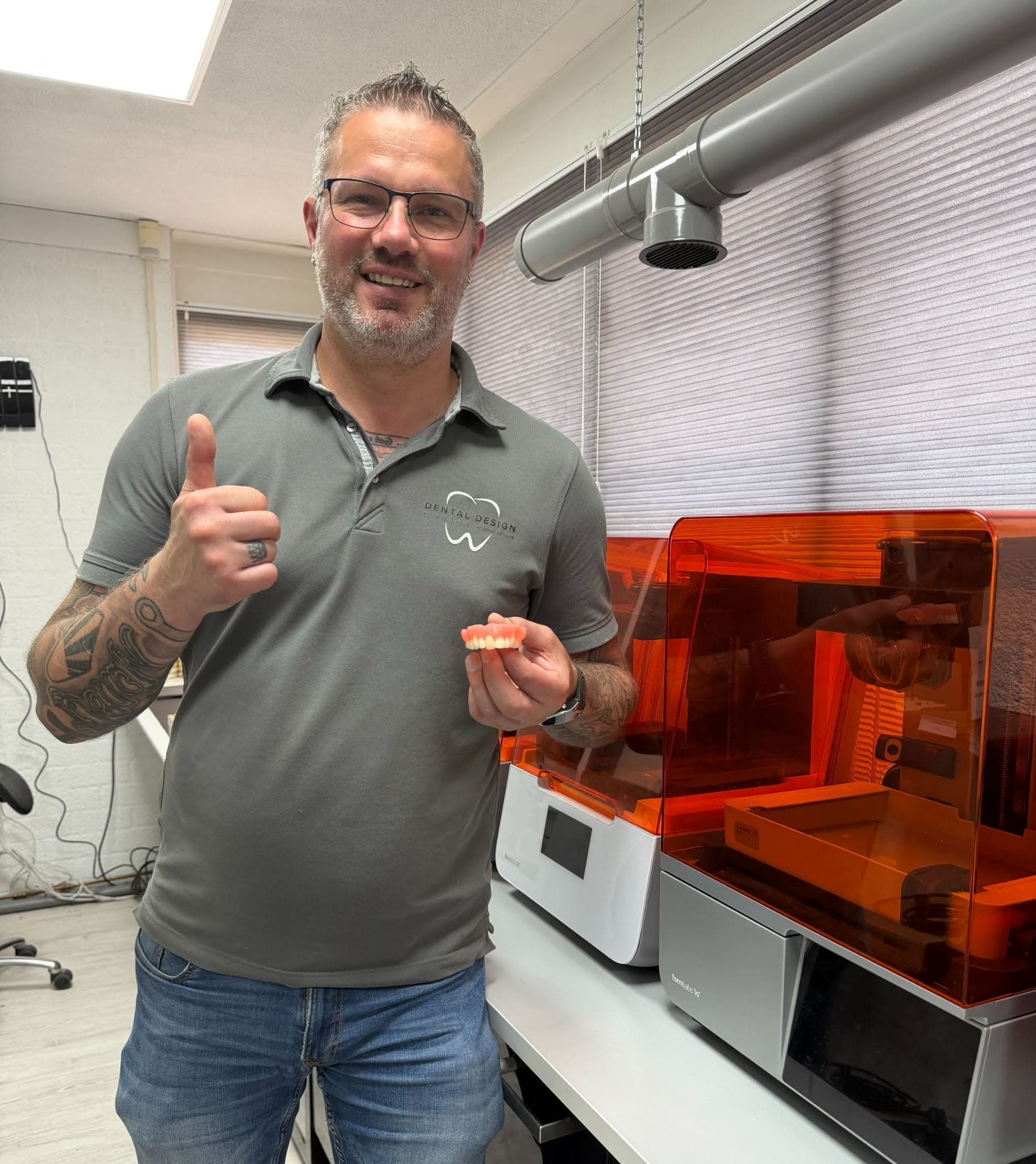
Bredewoud’s business is fully digital, delivering 150-200 cases a year to patients in the Netherlands. Bredewoud started printing with Formlabs Form 3B and Denture Base Resin V1. Within a year, he’d added a Form 3B+ and a Form 2. In addition to Formlabs, he has two Asiga Max 3D printers, which he used to start printing Lucitone Digital Print™ 3D Denture Base. Once Dentsply released Lucitone settings for Form 4B, Bredewoud began printing Lucitone Digital Print™ 3D Denture Base on Form 4B, and has now put Denture Base Resin V2 to the test, as well.
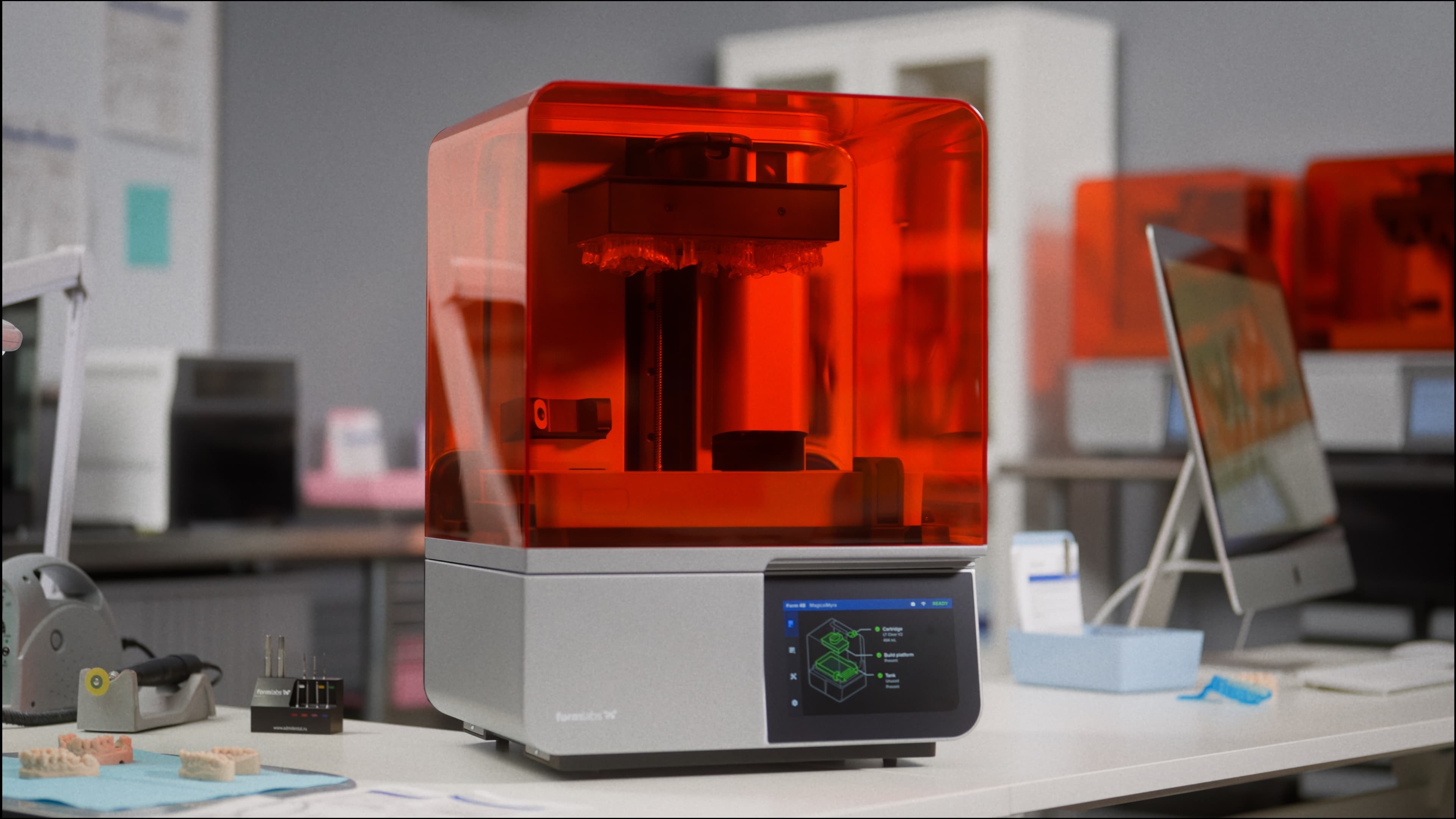
“At the moment, the Form 4B is the best printer. It's fast, it's very accurate, and it's still relatively small. As a denturist, I prefer the smaller printers so I can have a diversity of resins.”
Testing New Denture Base Materials
To test new denture base materials, Bredewoud uses a file with a crooked tooth placement that can be difficult to print. Once the base is printed and the teeth are attached, he grinds and polishes. Each step involves thorough checks and workflow analysis.
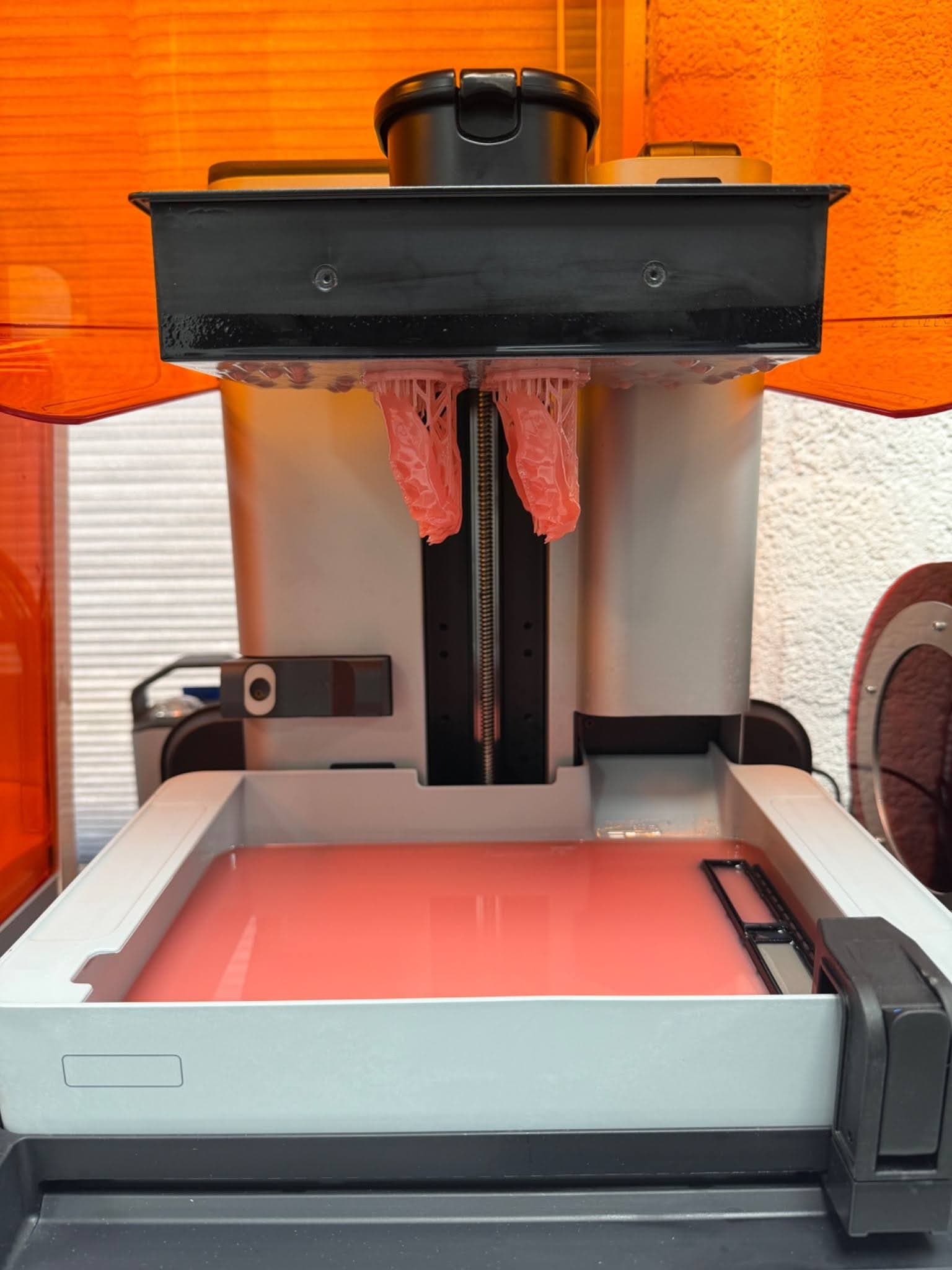
Denture Base Resin cartridges auto-dispense resin in Form 4B and Form 4BL for less mess.
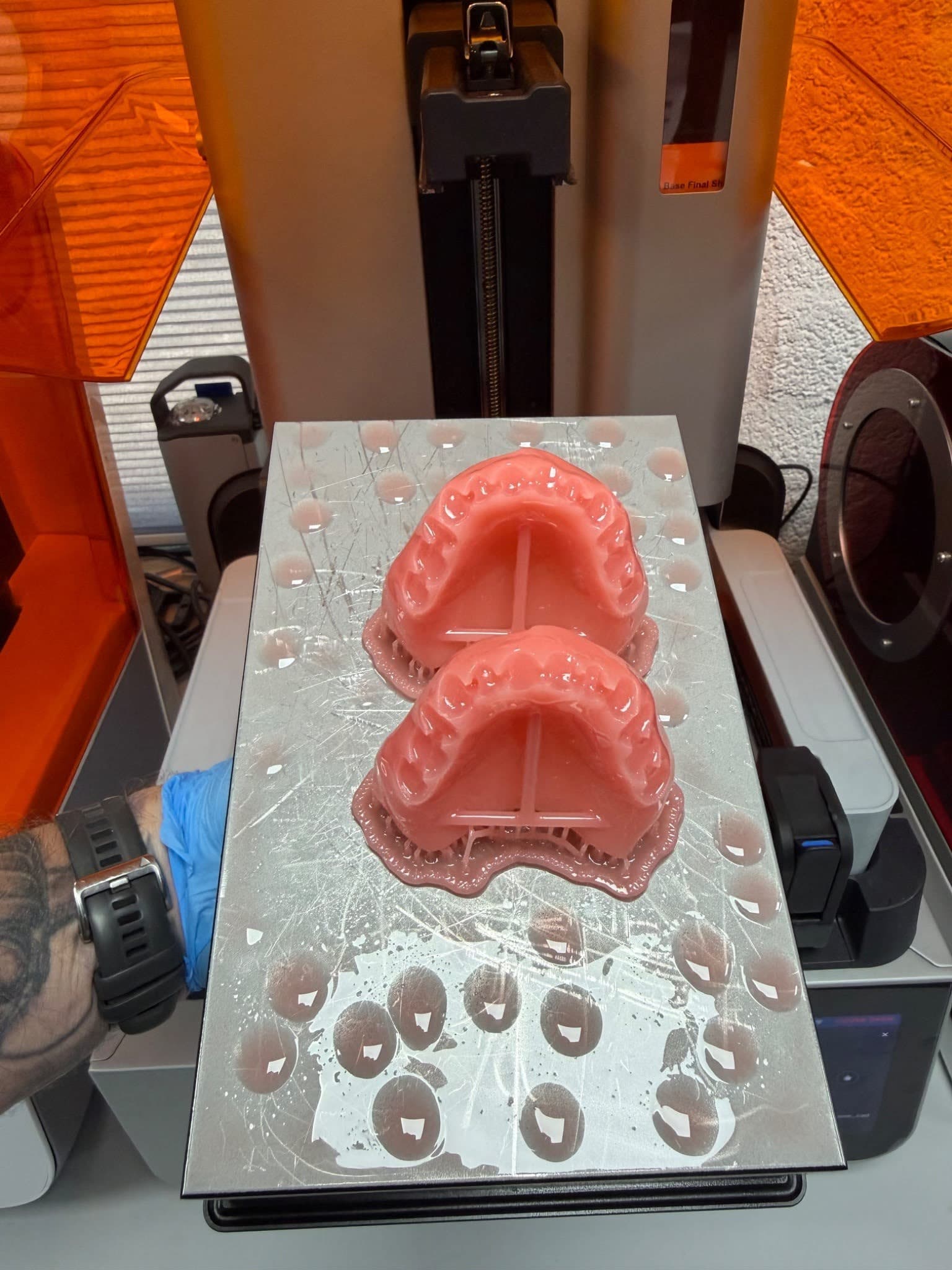
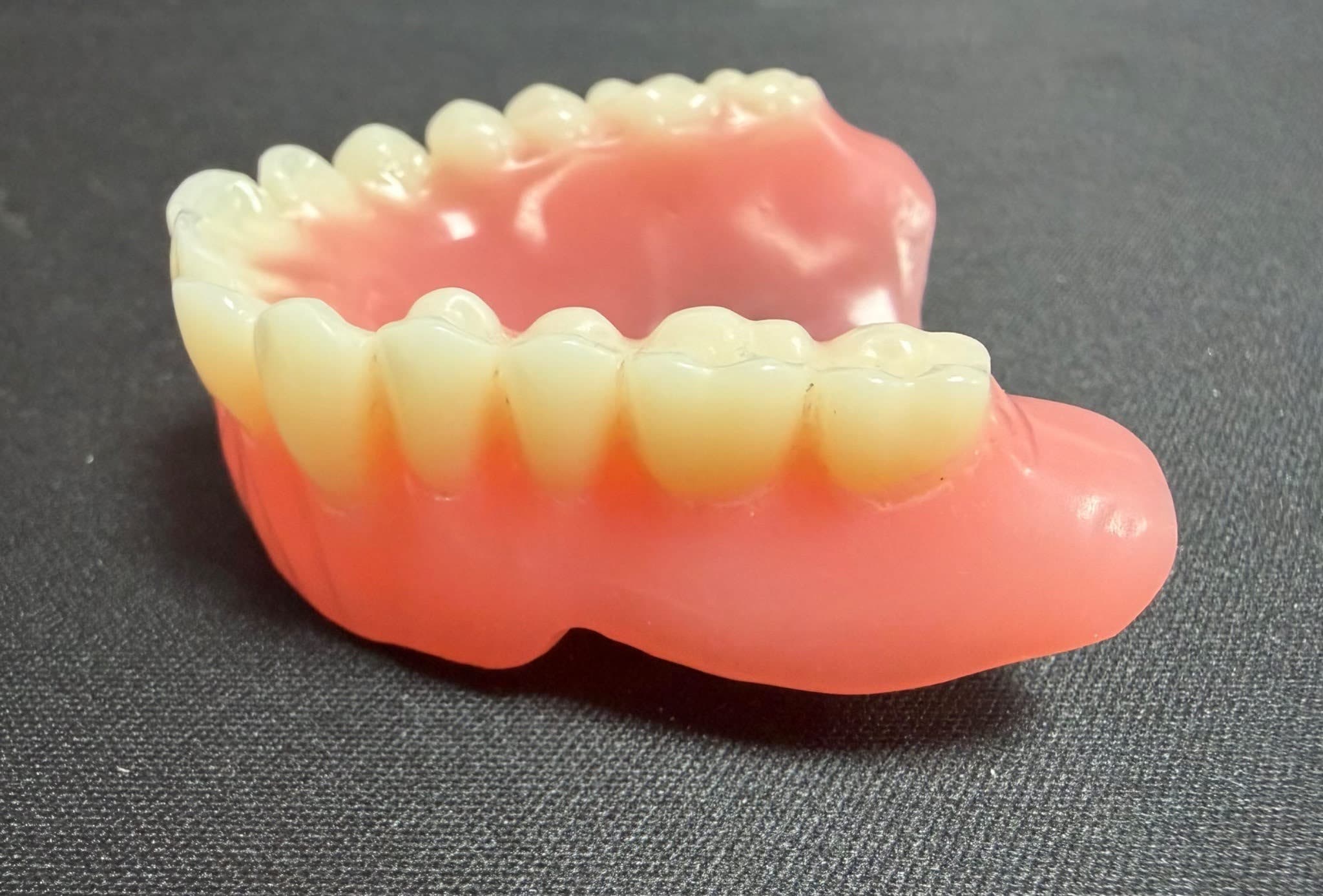
Bredewoud uses a trickier file for his test prints, like these denture bases.
These checks are important, as even a great printer can deliver a denture base that’s difficult to grind and polish — both the printer and material need to deliver.
Bredewoud finds that Denture Base Resin V2 has similar aesthetics to Lucitone 3D Denture Base, and appreciates the ~35% translucency. Additionally, he finds that grinding bases printed with Denture Base Resin feels good — like working with PMMA — and there’s no chipping during the process.
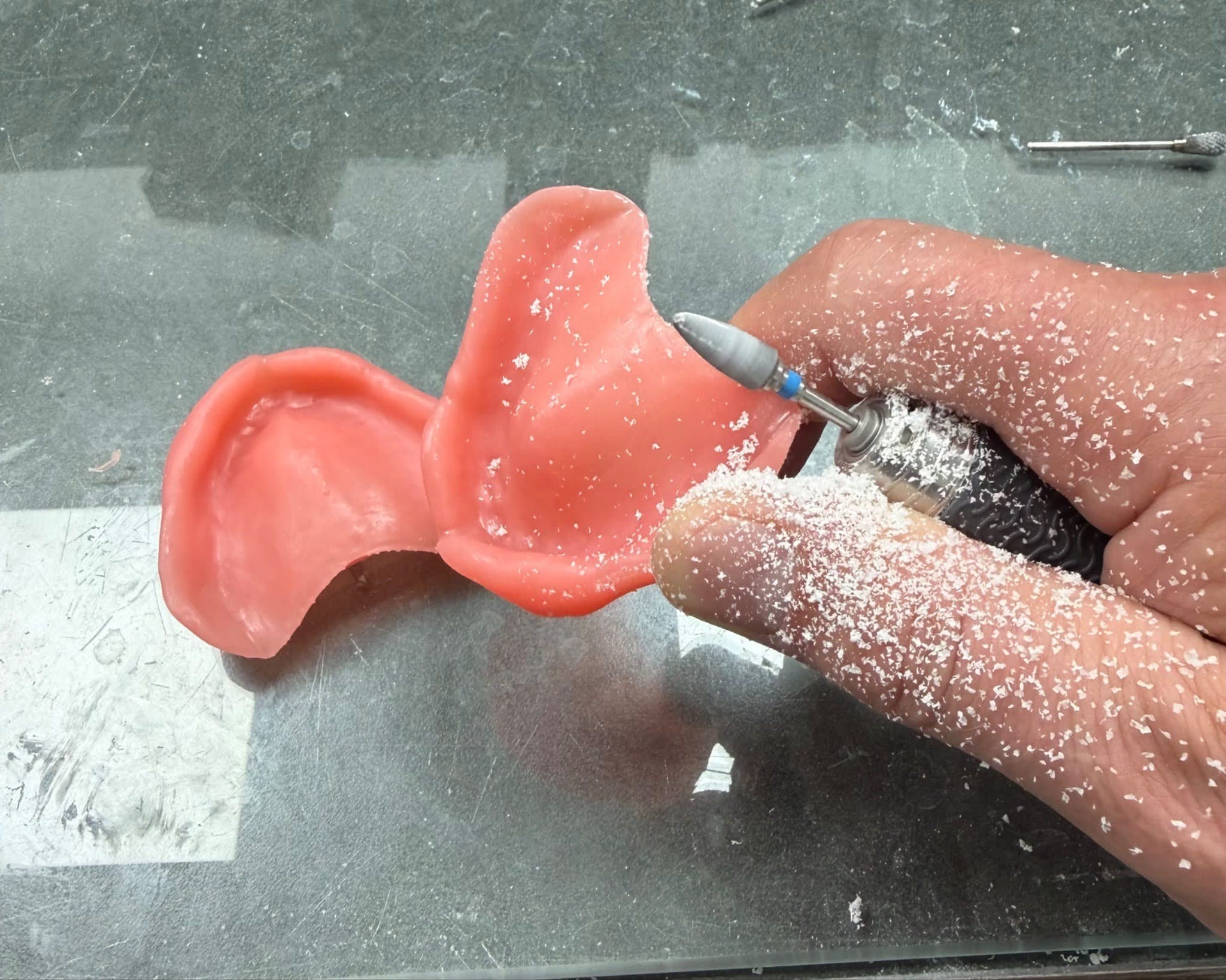
Bredewoud finds that grinding bases printed with Denture Base Resin feels like working with PMMA.
Start Printing Digital Dentures With Formlabs Denture Base Resin
Bredwoud currently delivers final dentures, expected to last for at least five years, manufactured with Lucitone 3D Denture Base and milled denture teeth. Temporary dentures are fully 3D printed, and intended for use from six months to one year.
After initial testing of Denture Base Resin V2, Bredewoud expects to start using it for temporary dentures to see how it holds up to daily wear as well as relining. If it performs as he hopes, he’ll then move to printing permanent dentures.
Request a free sample part to evaluate Denture Base Resin for yourself. To start printing with Denture Base Resin, buy it now or find a reseller in your region. Questions? Contact sales to discuss your unique business.